
Nothing new about that title, what’s new is that I’ve found I’m not the first in my genetic lineage to find America hard and choose Australia instead. Meet George William Parkinson, my great-great grandfather. [I’m guessing that’s a painted back drop for the photograph, which raises the question, why roses George? Why rambling roses? Nice bow-tie and fob-watch by the way]
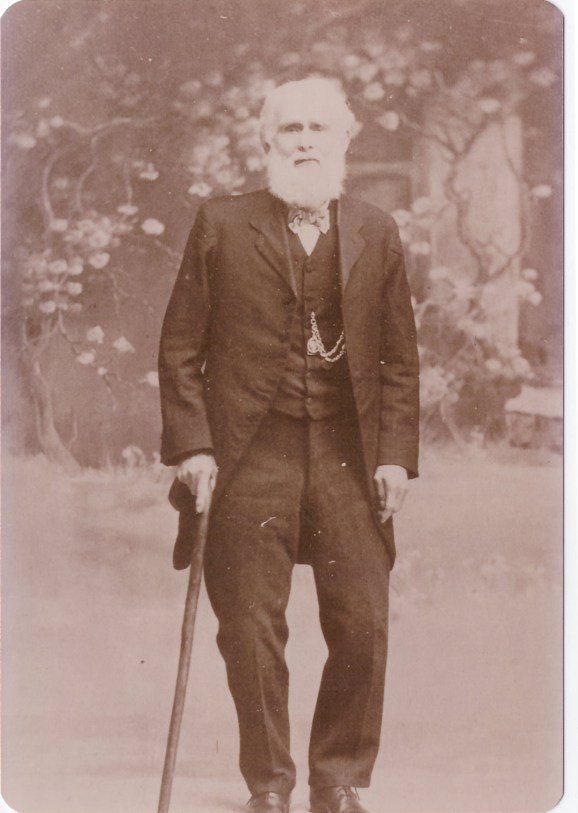
Despite looking kindly enough, my Grandmother, his granddaughter, said he was grumpy. She also had a story about his bowed legs, but if I told that now I would be getting ahead of myself. You’d be grumpy too if you’d had the pain in your legs that he probably had everyday since he was 11 years’ old.
George was born on the 5th of March 1838 in Bristol, Gloucestershire, to John Parkinson and Mary Anne Parkinson née Cole (pictured above), who were at the time both 18. George was followed over the next eight years by brothers Arthur and Thomas. John was an upholsterer and all seemed perhaps straightforward enough for the growing family. We will never know how they heard the news of Californian gold, or exactly what caught John’s imagination, but in 1848 he and George headed for New Orleans on the ship, The United States. John and George (aged 11) arrived in New Orleans on January 31st 1849 and headed up the Mississippi to join the overland route for California and gold. Yup, they were ’49 ers.
Here Granny’s story departs from the constraints of linear time. Her story had young George at the Battle of Little Bighorn, his life being saved only because on the day before the deaths of Col. Custer and all his men, George’s horse rolled on him breaking both his legs. Having been evacuated for medical attention he avoided the slaughter. George certainly had bowed legs, but Custer’s Last Stand, known to the Lakota and other Plains Indians as the Battle of the Greasy Grass, did not happen until 1876. By that time George was married and a proud father in Australia. Never let facts get in the way of a good story. Again we will never know, but I wonder if George’s horse did roll on him at some point on the wagon journey across to Sutter’s Creek. Accidents must have been regular. Perhaps because of his injury George and John left their fellow travellers, who were later massacred. Perhaps George’s broken legs saved their lives. Perhaps a growing lad with poor diet who rode a horse for months across America just developed bowed legs. We will never know.
I am again speculating, but forgive me, no one in my family tree has ever been rich so I suspect John was a better upholsterer than gold miner. The next we hear of John and George they are in Victoria, again chasing that most elusive metal as part of the Ballarat gold rush. The Victorian gold rush began in 1851, and father and son must have arrived in Victoria by 1853, because in May 1854 George gained a third younger brother, James Henry.
 This had me intrigued. How and where did the family reunite? I cannot find any passenger lists showing John or George leaving California. And why on earth did Mary Anne agree to the family joining a second gold rush? I thought perhaps she had no choice if mail arrived from California telling her that John and George had moved on, calling her to join them. But then I found record of a John Parkinson and company of 1 arriving in Melbourne on September 1852 on the Clipper Star of the East; a ship that sailed out of Liverpool. Liverpool is a long way from California.
I looked on in the Unassisted Passenger Lists, and there she is, Parkinson Mary Anne, arrived Melbourne, December 23rd 1852 onboard the Covenanter (great name for a Presbyterian). Now this advert is not for Mary Anne’s sailing it’s for Progress, a ship to be succeeded by the new Covenanter. When I read it the first time I missed the ship’s name and imagined it somehow took over six months to arrive. I bet Mary Anne’s glad I was wrong, that does seem unreasonably long. Six months in a leaky boat notwithstanding. But now we know something of the Covenanter; it was new. And it is another bit of rich context:

It seems that our Mary Anne arrived in time to cook Christmas dinner 1852, just three months after John arrived. I wonder if he knew she was coming? I started to wonder, am I saying that John and George returned to Bristol to collect Mary Anne and the boys? That’s romantic dedication if you’re at a gold rush in California. Maybe George’s accident was earlier on in their journey than I had assumed and in fact the two returned to Bristol without reaching their dream of Californian gold. Thwarted by these United States, did they too return home before setting out again in 1852. Frequent sailing miles? Maybe, but I repeat my question, why on earth did Mary Anne agree to a second gold rush? I am however not at all surprised that this time she refused to be left at home. Although I am curious why they didn’t all travel together.
Mary Anne is a very interesting woman; one of several I’m proud to list among my ancestresses. We guessed didn’t we that she and John were not affluent in 1848, perhaps John wasn’t the greatest upholsterer or perhaps his dreams were just bigger than his abilities. But whatever the reason, when he and George headed off in search of fortune in California, Arthur was sent to his grandparents while Mary Anne and Thomas went to the Stapleton Poor Asylum. Interestingly they weren’t admitted, they went at the instigation of their church, who arranged that Mary Anne would be trained as a nurse and midwife in return for board and lodging. That’s right, in 1848, Mary Anne was a single mother, separated from two of her children, working in an asylum and workhouse, training as a midwife and nurse. She does look capable doesn’t she. That photo up the top of this post is Mary Anne. And whether travelling with John and George or without, in 1852 she travelled with two small children to Victoria.
Mary Anne and John had a total of six children over 23 years. She died of pneumonia in 1879 at the age of 59 (women in my family don’t make old bones), in Auckland New Zealand. Of course they didn’t stay in Victoria, I mean there was a perfectly good gold rush south east of Auckland in the 1860s. I am only surprised John didn’t drag her over the Pacific to Chile.
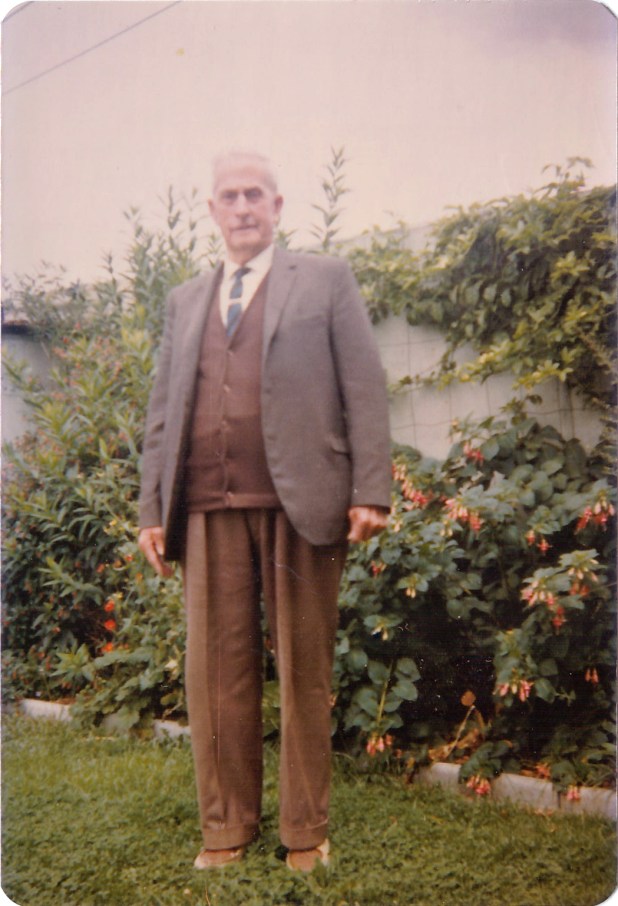
Our George of the bowed legs, who was not at the Battle of the Greasy Grass, married Susannah Elizabeth Norris in 1866 in Fitzroy, Victoria. Poor Susannah died the next year and George then married Emily Browell and they had six children together. He died on 17 May 1920 in Footscray, Victoria, at the age of 82 and was buried with Masonic rites. George’s eldest son, Frederick Arthur Parkinson was my great-grandfather. My Poppa. To my knowledge he never left Victoria, but perhaps there’s something poetic in the fact that in this photograph he appears to be wearing moccasins. Or am I imagining…

![The Strange Case of the Alchemist's Daughter (The Extraordinary Adventures of the Athena Club Book 1) by [Goss, Theodora]](https://images-na.ssl-images-amazon.com/images/I/51yxwo90SmL.jpg) In a
In a ![Bad Memory (Jessica Shaw Book 2) by [Gray, Lisa]](https://images-na.ssl-images-amazon.com/images/I/51hO37zlQVL.jpg) Also in crime, yes I’m realising that I’ve spent a lot of time in crime and mindless violence lately for some reason… anyway, also in crime is Lisa Gray who started a Jessica Shaw series that’s in a style similar to Sara Gran. These are both young women writers, very definitely writing for an anti-heroine millennial audience – these are raw, broken protagonists and totally awesome. Not for the reader who doesn’t accept that their young protagonists may do drugs and go off the rails from time to time. Speaking of millennials, an awesome young friend recommended Sally Rooney’s Normal People, and while I’m only two chapters in, I’m really enjoying it. Unique writing style that takes you way inside the characters, really great. Thanks Rohan.
Also in crime, yes I’m realising that I’ve spent a lot of time in crime and mindless violence lately for some reason… anyway, also in crime is Lisa Gray who started a Jessica Shaw series that’s in a style similar to Sara Gran. These are both young women writers, very definitely writing for an anti-heroine millennial audience – these are raw, broken protagonists and totally awesome. Not for the reader who doesn’t accept that their young protagonists may do drugs and go off the rails from time to time. Speaking of millennials, an awesome young friend recommended Sally Rooney’s Normal People, and while I’m only two chapters in, I’m really enjoying it. Unique writing style that takes you way inside the characters, really great. Thanks Rohan.


 America is odd, an intensive MA is… intense, winter has been arctic vortex insane, and I’ve been neglecting you all rather than bombarding you with exhausted monologues of frustration and tears. But spring has sprung, the grass is ris’, the end is approaching (of my MA and possibly civilisation as we know it, but let’s not despair). We are lovers and fighters and we don’t give up for anyone. I thought tonight I’d share some of the soul-food that has sustained me over the seven and a half months that I’ve been here. It’s free advertising for the capitalists who benefit from your purchases, fetishes and consumptionisms, but see how you go enjoying my suggestions…


 Reading fiction about women doing fabulous things after not being given an easy start in life, without spending agonising pages on self reflection and guilt trips… Theodore Goss The Strange Case of the Alchemist’s Daughter, and the follow up which was equally as luscious, European Travels for the Monstrous Gentlewoman. All those awful male Gothic scientists like Moreau and Rappaccini and Jeckel and Hyde, well Goss has blessed them with intelligent, wilful, hilarious and damaged daughters who seriously kick their fathers in the reproductive-selfishness organs… and Gothic scientific society where it hurts. I laughed out loud, they’re brilliant. Oh and when I’m trying not to think before sleeping but can’t afford the time of a novel or the risk of binge watching a series of tv, I’m reading Ursula le Guin short stories and talks in bed, with a warm turmeric and cocoa drink.


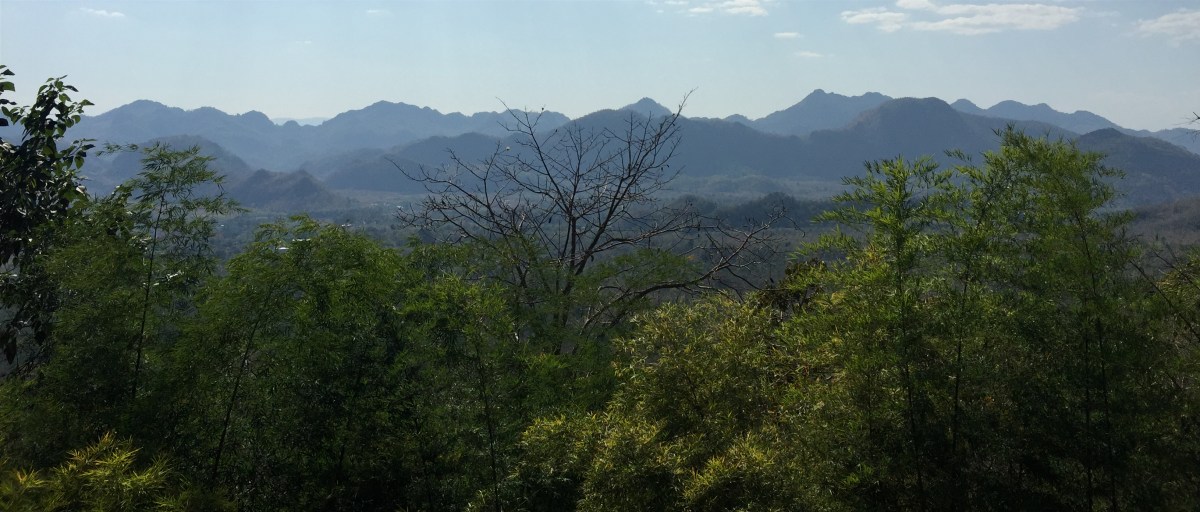
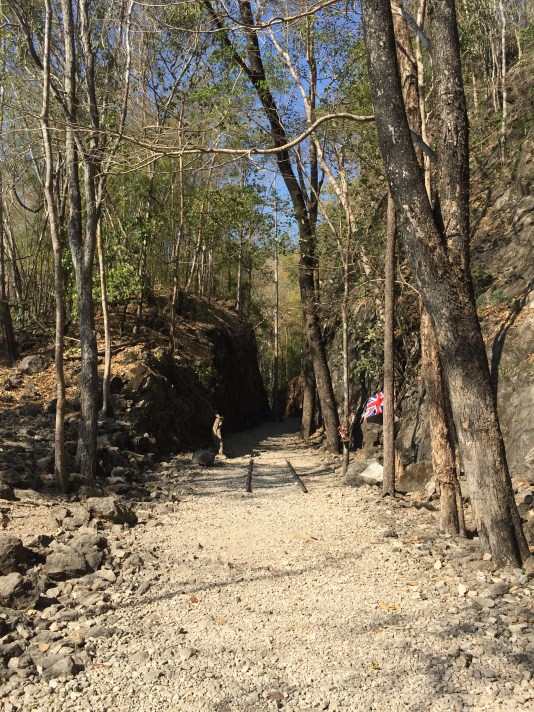
 I’ve never been one for war memorials, I’ve been to one Dawn Service, never felt I wanted to go to Gallipoli. But something in me jumped at the chance to take a trip to the River Kwai, it just seemed right somehow. I didn’t really even think about what it would be, just knew I had to go. It seemed like a good reason for having found myself in Thailand.




 Hallelujah


 Her mother died in Footscray. She and I were both born in Footscray Hospital. Her Dad was a life member at Footscray. Their blood ran red, white and blue. So I stood, tears flowing, in a Queensland bar surrounded by strangers, singing Son’s of the ‘scray, the red, white and blue. 62 years after she screamed herself hoarse when they last brought home the flag. And I think I met a woman with blue eyes, a voluptuous love, and a loyal generous heart.
 Wendy's Out of Station